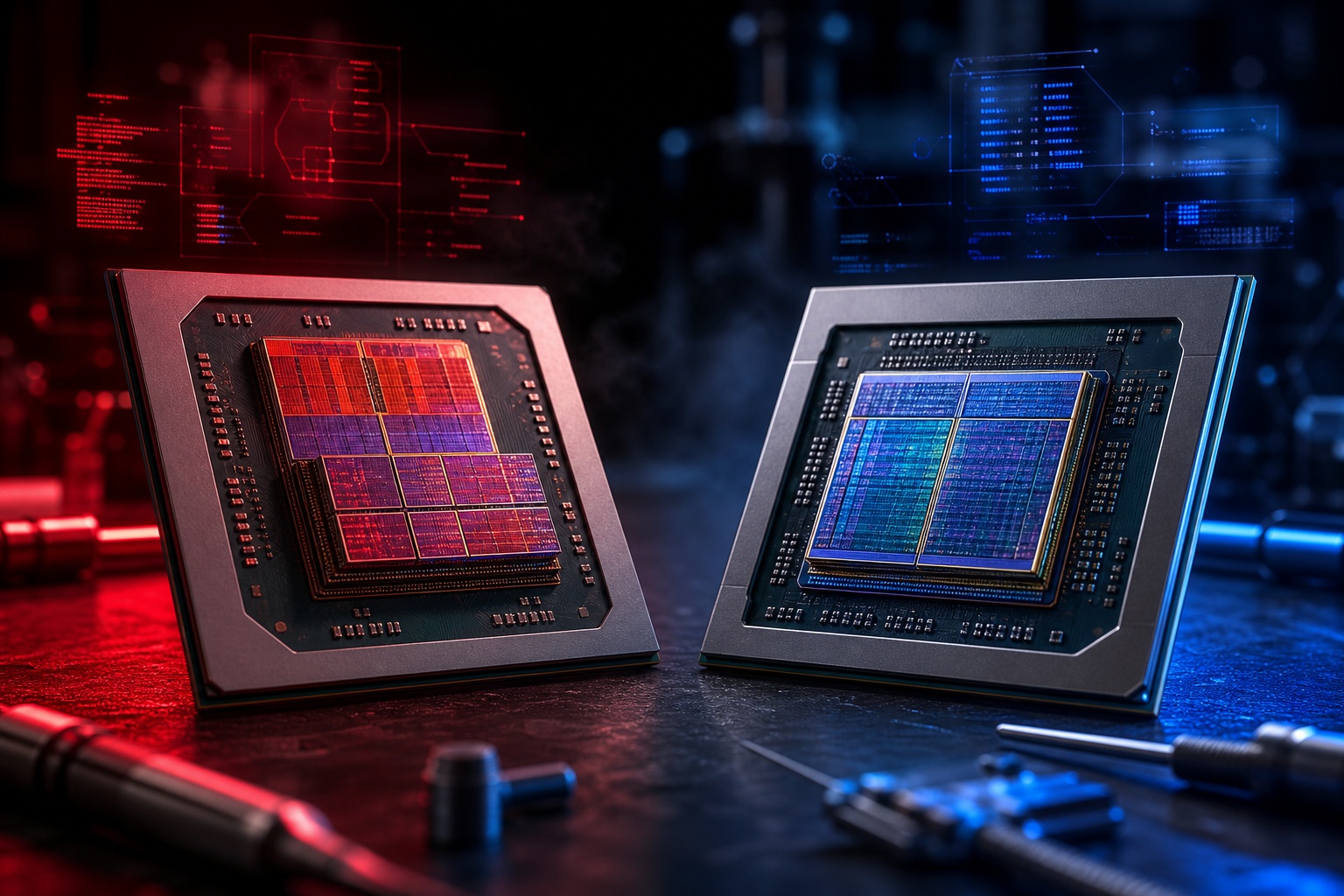
Zen 6 vs Nova Lake splits by workload: there's no knockout winner. And as of mid-2026, neither chip has launched or been independently benchmarked, so every performance number below is a projection from leaks and roadmaps, not a verdict.
Here's what the projections say. AMD's Zen 6 is the safer call for gaming (mature 3D V-Cache plus higher clocks), for power efficiency, and for cheap upgrades, because it stays on the AM5 socket. Intel's Nova Lake likely leads heavily-threaded work on sheer core count, and its new stacked "bLLC" cache is Intel's most serious swing yet at AMD's gaming crown. Ignore the "52 cores vs 24 cores" headline: those two numbers count completely different things, and neither has run a single retail benchmark.
Where the matchup stands
Both are unlaunched next-generation desktop chips expected between late 2026 and early 2027, and no independent benchmark exists for either. Zen 6 (Medusa Ridge on desktop) succeeds Zen 5 and the Ryzen 9000 series. Nova Lake succeeds Arrow Lake and Panther Lake, the Core Ultra 200 and 300 families.
Almost everything about clocks, cores, and cache is roadmap and leak reporting. A few things are official: AMD confirmed TSMC's N2 node for the Zen 6 EPYC "Venice" server line (which reportedly scales to 256 cores) and committed to AM5 support through 2029. Most of the rest is not confirmed. The moment reviewer benchmarks land (gaming FPS, Cinebench, wall-power) they override every projection here. Read this as a dimension-by-dimension projection, not a winner's podium.
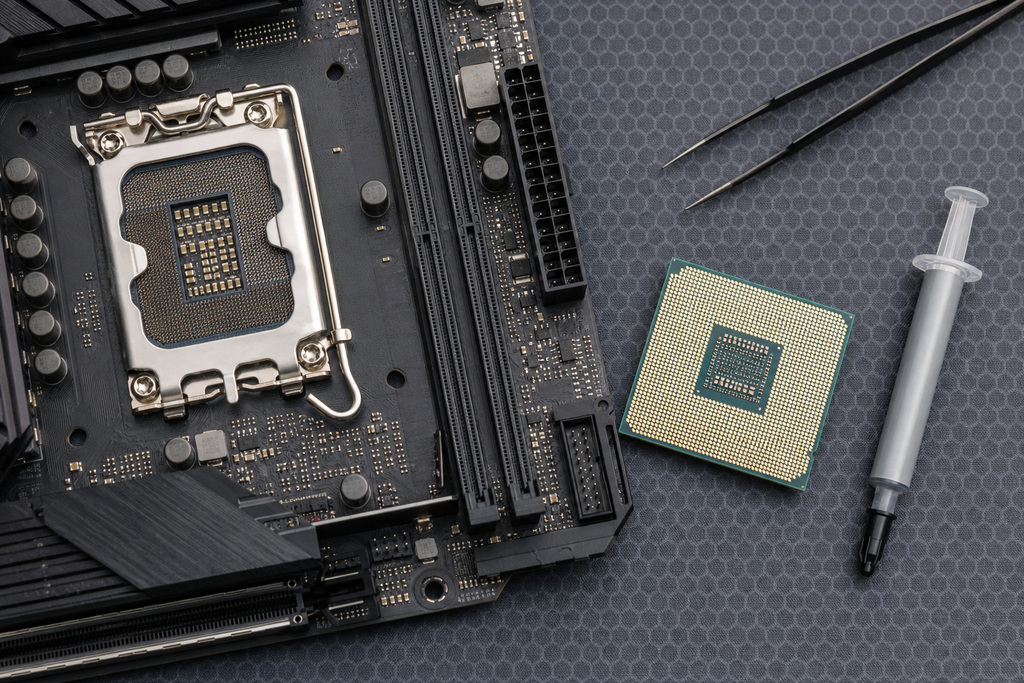
The specs side by side
Here's what the roadmaps and leaks currently point to. Treat every unconfirmed row as provisional: these shift before retail.
| Spec | AMD Zen 6 | Intel Nova Lake |
|---|---|---|
| Successor to | Zen 5 / Ryzen 9000 | Arrow Lake & Panther Lake / Core Ultra 200–300 |
| Likely branding | Ryzen 10000 series | Core Ultra 400 series |
| Process node | TSMC N2 (2nm) compute dies; mature I/O die | Intel 18A + some TSMC tiles |
| Socket | AM5 (continued, support to 2029) | New LGA1954 |
| Core design | Homogeneous full cores, 12 per CCD | Hybrid: P + E + low-power E |
| Max desktop cores | 24 (+ optional 2 LP-E), 48 threads | 52 total (16P + 32E + 4 LP-E); one leak says 56 |
| Large/3D cache | Continued X3D (3D V-Cache) | New stacked bLLC, ~144–288MB last-level |
| L3 (standard part) | ~48MB per CCD | 4MB shared L2 per 2 P-cores |
| Instruction set | AVX 10.2 | AVX 10.2 |
| Peak clocks | 6GHz+, possibly 7GHz | ~6GHz (current Intel range) |
| Memory | DDR5-8000+; CUDIMM toward DDR5-10000 | DDR5-8000+; CUDIMM |
| Flagship TDP | Not confirmed | ~175W before turbo |
| Expected launch | Late 2026 / early 2027 | Late 2026 / early 2027 |
Reading past the "52 cores vs 24 cores" headline
Intel's 52 and AMD's 24 aren't the same currency. Nova Lake's top count stacks three core types: 16 full P-cores (the new Coyote Cove design), 32 smaller E-cores (Arctic Wolf), and 4 low-power E-cores. Zen 6's 24 are all full, multithreading-capable cores: 48 threads, every one a heavyweight.
Two philosophies drive that gap. AMD packs 12 identical cores per compute die, up from 8 on Zen 5: homogeneous and simple for Windows to schedule. Intel scales a hybrid mix and leans on Thread Director to route work to the right core class.
More cores doesn't mean faster. Gaming and most everyday software run on one to eight threads, where single-thread speed and per-core architecture decide the result. Amdahl's law caps what extra cores buy once a workload can't split further. A 52-core chip is not "twice a 24-core chip" outside rendering, encoding, and compilation: and it's nowhere near twice as fast in a game.
AMD Zen 6
Zen 6 is AMD's evolutionary step on a proven node. The headline change is 12 cores per compute die, up from 8, putting up to 24 cores and 48 threads on a two-die flagship without adding a third die. Compute dies move to TSMC N2 (2nm-class) while the I/O die stays on a more mature node. AMD points to double-digit IPC gains and clocks of 6GHz-plus, possibly 7GHz, with X3D V-Cache carrying forward for gaming and roughly 48MB of L3 per standard CCD.
Pros:
- Drops into existing AM5 boards with a BIOS update (support committed through 2029)
- Mature 3D V-Cache: today's gaming leader, the Ryzen 7 9800X3D, carries over and improves
- Homogeneous full cores are easy to schedule and strong per-thread
- Lower manufacturing risk on proven TSMC N2
- Likely efficiency lead
Cons:
- 24 cores caps top-end throughput below Nova Lake's count
- Dual-CCD parts still carry cross-die latency
- IPC uplift may trail Nova Lake's rumored jump
- Specs are leaks, not confirmed retail figures
Verdict: Best for gamers, existing AM5 owners, and efficiency-focused or compact builds.
Intel Nova Lake
Nova Lake is Intel's aggressive comeback swing. Leaks point to a top desktop SKU of 52 cores (16 P-cores, 32 E-cores, 4 low-power E-cores) a large jump from Arrow Lake's 8P+16E. New Coyote Cove P-cores and Arctic Wolf E-cores target a big IPC and multithreaded uplift, built across Intel 18A plus some TSMC tiles. The part gamers should watch is bLLC, a stacked large last-level cache rumored at 144–288MB: Intel's direct answer to X3D. Flagship TDP sits around 175W before turbo, and the chip needs a new LGA1954 socket.
Pros:
- Far more cores (up to 52) for rendering, encoding, compilation
- New bLLC cache is a genuine gaming play, not a paper spec
- Rumored IPC edge over Zen 6
- Fast memory support: DDR5-8000+ and CUDIMM toward DDR5-10000
Cons:
- New LGA1954 socket: no upgrade path from current Intel boards
- ~175W flagship prioritizes performance over efficiency
- The Intel 18A ramp is the biggest execution risk in the comparison
- Most of those 52 are E-cores, not full P-cores
- Unconfirmed: one leak even claims 56 cores, not 52
Verdict: Best for heavily-threaded professionals chasing maximum throughput, and buyers curious whether bLLC finally matches X3D.
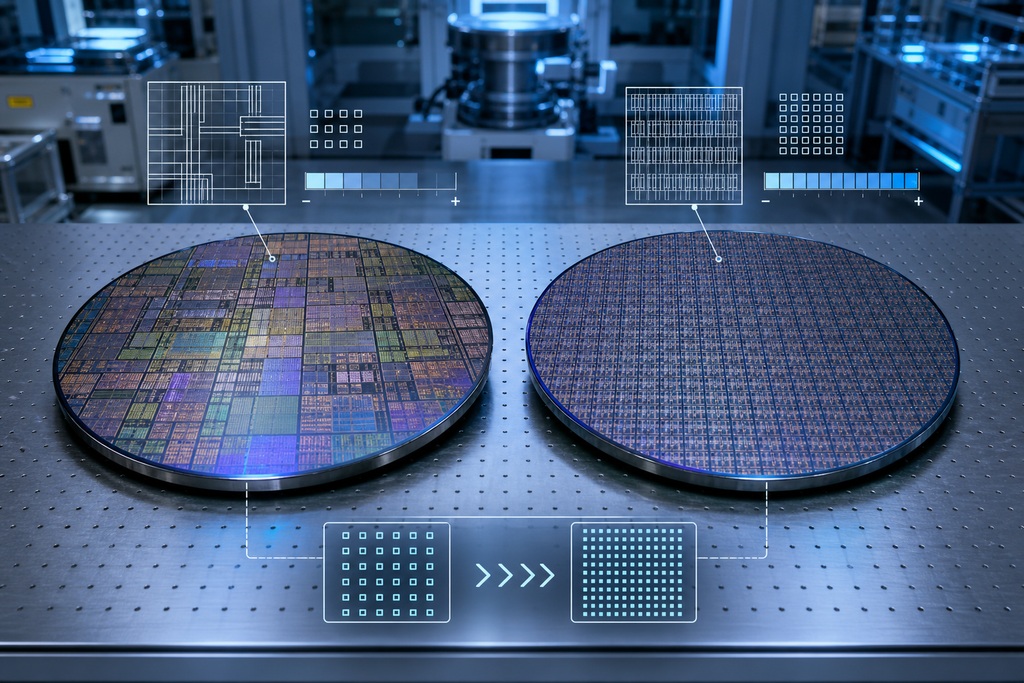
TSMC N2 vs Intel 18A: the manufacturing wildcard
AMD is taking the low-risk path on a proven external node; Intel is betting on its own. Zen 6's compute dies use TSMC N2 (2nm), the same 2nm family AMD already confirmed for its EPYC "Venice" chips: a known quantity with predictable yields. Nova Lake builds its compute tiles on Intel 18A, Intel's first node with backside power delivery, plus some TSMC tiles.
On paper, 18A is a denser node than N2. On delivery, it's unproven at this scale, and Intel's history of node delays is exactly why this is the single biggest uncertainty in the whole matchup. A smaller node number is not a delivered lead until yields, clocks, and volume hold up. Ramp 18A cleanly and Nova Lake pairs density with its core-count push; stumble, and availability and clock speeds pay for it.
Key battlegrounds: projected performance by workload
Here's where each chip projects to lead: and why every cell is a projection until real benchmarks land.
| Workload | Projected edge | Why (with the caveat) |
|---|---|---|
| Gaming | Zen 6 (X3D) | Mature 3D V-Cache leads today; Nova Lake's bLLC is the wildcard, unbenchmarked |
| Multithreaded / productivity | Nova Lake | 52 cores vs 24 give a raw throughput lead at the top end: projection only |
| Single-thread | Too close to call | Nova Lake's rumored IPC edge vs Zen 6's clock edge; neither validated |
| Efficiency | Zen 6 | Homogeneous design on N2 vs Nova Lake's 175W performance-first flagship: unmeasured |
Nova Lake is the likely throughput favorite at the extreme high end: 52 cores, even mostly E-cores, produce enormous aggregate compute for rendering and encoding. Zen 6's 24 full cores and 48 threads should hold in software that prefers homogeneous cores or high per-thread performance: and likely do it at lower package power. None of that is settled until wall-power meters and Cinebench runs exist.
The gaming showdown: X3D vs bLLC
AMD's X3D is the early gaming favorite because it has led for several generations and Zen 6 continues it. Intel's bLLC is the most credible challenge yet, but a bigger cache alone doesn't win games. The Ryzen 7 9800X3D is the current gaming champion, and stacking a large cache beside full cores is a formula AMD has refined across three generations.
Nova Lake's bLLC (rumored 144–288MB) attacks exactly that advantage. But cache capacity is not frame rate. Latency, memory behavior, clock speed, and how Windows schedules across P-cores and E-cores decide games as much as raw megabytes do. Intel could close the gap, match it, or fall short: and nothing settles it until retail chips run real games. This is the storyline to watch.
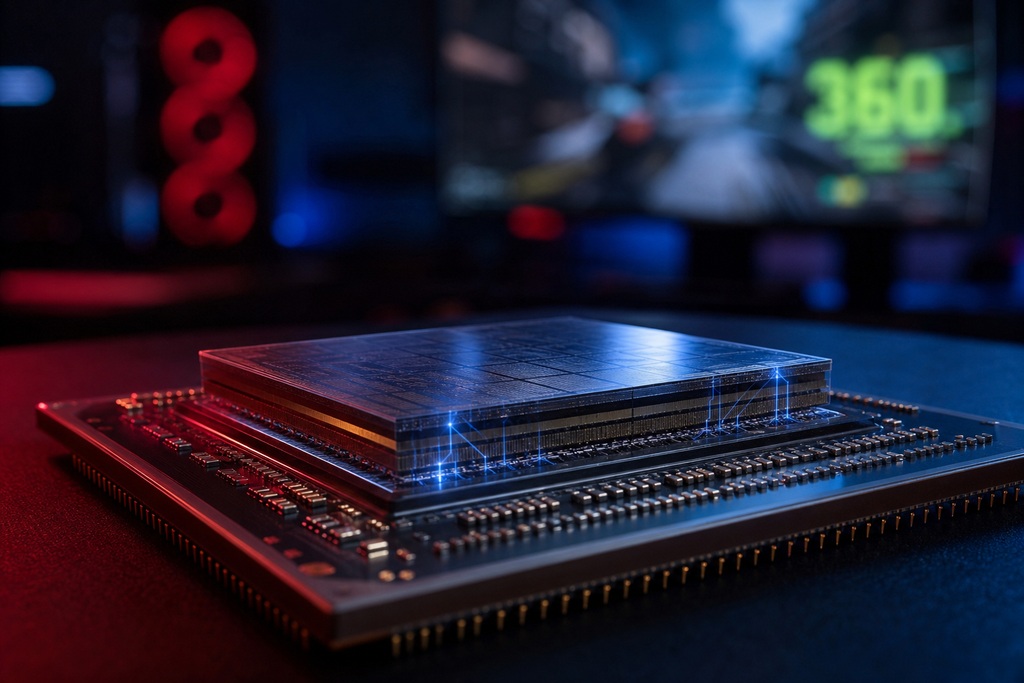
Platform, socket, and upgrade cost
This is the clearest practical difference for a buyer. Zen 6 stays on AM5, which AMD has committed to support through 2029, so it's likely a BIOS-update drop-in for many existing 600- and 800-series boards: reuse your motherboard, memory, and cooler. Nova Lake needs a new LGA1954 socket and a 900-series motherboard, so current Intel owners buy a new board too.
For anyone already on AM5, that's a full motherboard's cost Zen 6 buyers can skip: a difference no benchmark erases. Current Intel LGA1851 owners get no such continuity; Arrow Lake boards do not carry Nova Lake.
Memory: faster DDR5, not DDR6
No: neither Zen 6 nor Nova Lake moves to DDR6. Both stay on DDR5 with better controllers: official speeds pushing past DDR5-8000, and CUDIMM modules reaching toward DDR5-10000. The gain is higher DDR5 speed and improved memory controllers (plus CAMM2 form factors on compact builds), not a new memory standard. If you're holding out for a DDR6 desktop platform, this is not the generation.
Who should not wait for either
If you need a working PC now, don't wait: buy today and re-evaluate when launch benchmarks appear. Both chips are more than six months out with no confirmed specs, no pricing, and no independent numbers. Waiting means running old hardware, or nothing, while paying roughly the same real cost later.
Skip the wait if you need a machine now, if your current AM5 or LGA1851 board already handles your work, or if your budget can't absorb a first-generation platform premium. Waiting only makes sense if you're already overdue for a full rebuild and can comfortably sit tight until real reviews — then let FPS and Cinebench numbers, not roadmaps, make the call.
The bottom line: who should lean which way
Neither chip wins outright on projections: Nova Lake leads on core count (52 vs 24) and IPC, Zen 6 on frequency and gaming cache — pick by what you actually run.
- Gaming: Zen 6 X3D is the early favorite; Nova Lake's bLLC could make it close.
- Rendering, encoding, heavy multithreading: high-end Nova Lake likely wins on raw throughput.
- Efficiency and compact builds: Zen 6 looks stronger.
- Already on AM5: Zen 6 is the obvious, cheapest upgrade — often just a BIOS flash.
- Need a PC now: don't wait — buy what fits your budget and re-check at launch benchmarks.
GPU Value Board: What Your Frames Cost
Here’s the straight answer on launch MSRP: lower cost per 1440p frame is better. It is a price check, not permission to ignore VRAM, features, or the deal actually in your cart.
Updated on July 16, 2026 — July 2026 MSRPs and aggregate Ultra benchmark averages.
Cost-per-Frame Calculator
Use the same resolution, game suite, and settings for both numbers. The board uses MSRP ÷ 1440p average FPS; lower wins. See how we test.
Enter a real price and 1440p average FPS.
FAQ
What is the #1 CPU in the world?
There's no single answer — it depends on the job. For desktop gaming as of mid-2026, AMD's Ryzen 7 9800X3D holds the crown thanks to 3D V-Cache. For heavily-threaded work, high core-count parts like AMD's Threadripper and the top Ryzen 9 and Core Ultra 9 chips lead. Zen 6 and Nova Lake are both projected to reset this once they launch and get benchmarked.
Is Nova Lake going to be good?
On projections, yes — especially for multithreaded work, where its rumored 52 cores should deliver a large throughput jump, and its new bLLC cache is Intel's most serious attempt yet to challenge AMD in gaming. But nothing is benchmarked, the Intel 18A node ramp is a real execution risk, and it requires a new LGA1954 motherboard. Treat it as promising, not proven.
Will Zen 6 have DDR6?
No. Zen 6 stays on DDR5, just faster — official support past DDR5-8000 and CUDIMM modules reaching toward DDR5-10000. There's no sign of a DDR6 desktop move this generation from either AMD or Intel.
What is AMD's best CPU right now?
For gaming, the Ryzen 7 9800X3D is AMD's best desktop chip as of mid-2026, thanks to 3D V-Cache. For productivity and multithreading, the 16-core Ryzen 9 9950X (and the 9950X3D for a mix of both) tops the Ryzen 9000 line. Zen 6's Ryzen 10000 series is expected to succeed them in late 2026 or early 2027.
References
- ExtremeTech, "Nova Lake wins on IPC, Zen 6 on frequency (rumor)," April 6, 2026, citing leaker HXL.
- AnandTech Forums, "Nova Lake vs Zen 6" discussion thread, opened November 23, 2025.
Sources
See our editorial policy for how sources and updates are handled.